
-
- 6 views
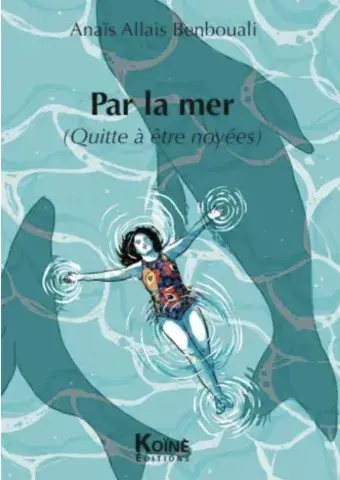
Par la mer (quitte à être noyées)
This is the story of women caught between two worlds, at a turning point in their lives, in that sort of limbo between the end of one thing and the beginning of another about which they know nothing. Houda has just lost her mother, Max has just left her job, and Assia has fled her country by crossing the sea. These women, who at first glance have nothing in common, are forced to live together for the duration of a storm, in a house that’s taking on water. ‘When I left my country, I wandered from town to town; I was invisible. I’d startle whenever I caught sight of my reflection in the water of a harbour or in a shop window, and I waited for a place to give me real contours: a face, arms, legs, papers, a job, a roof over my head. A family. What I missed most were the Arab festivals and the songs you’d hear there. Here, there’s the song of the whales, which carries all the ululations in the world. I’d read somewhere that if three sources of water—also known as the three sisters—come together in the same place at the same time, there’s a high risk of flooding. The first sister is the water that comes from the north, following the opening of a dam. The second comes from the sky; it is the water that falls to the earth. The third is the high tide coming in from the ocean. Little by little, the sea is gaining ground. ‘El bhar fi kouli makan.’
Distinction(s)
- Lauréat - 2024

Related shows in archive
2025
 Anaïs Allais BenboualiMar 12 > Mar 14, 2025