-
- 122 views

Paradis plage
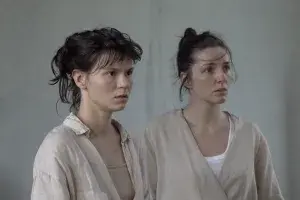
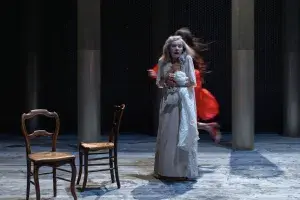
“Benti,” who lives abroad, returns to Morocco regularly. But this time, it’s to get married. In her suitcases lies the weight of an unspoken truth that spills over into the phrases of the swab and the nooks and crannies of the bourgeois living room where the family myth has unfolded for several generations. Difficult to translate into French, the swab symbolizes, in Moroccan society, both good manners and a millennia-old way of life—a double-edged code that fosters hospitality as much as it fosters repression. For between a brother and a sister, a specter that threatens to shatter everything haunts this seemingly perfect family. Kenza Berrada, director and actress, paints a subtle portrait of the silences that precede the storm and the nostalgia for a lost splendor, within this social milieu she knows from the inside. She allows us to feel all the nuances of the aïta (literally, the “cry”), performed by an all-male ensemble—the Kabareh Cheikhats—dressed in sparkling caftans and shimmering wigs. In their dances and songs, something rises up, and lost time is made up for, setting the bodies free.
Performance scheduleAdd dates
Performance archives
- T2G | GennevilliersOct 07 > Oct 11, 2026
- Théâtre National de Strasbourg - TNS | StrasbourgSept 22 > Oct 02, 2026